
Have a question about Liposuction?
In this article
- What areas of the body can be treated with liposuction?
- Which body areas give the best results, and which have limits?
- When is liposuction alone enough, and when is a combined procedure better?
- What are the risks in different liposuction areas and in combined surgery?
- How do travel, recovery, and clinic choice affect the treatment areas you can have?
One of the most common questions before body contouring is what areas of the body can be treated with liposuction, and the honest answer depends as much on fat quality and skin tone as it does on location. Some zones respond very well to liposuction, while others need a different plan or a combined procedure to avoid an uneven result.
What areas of the body can be treated with liposuction?
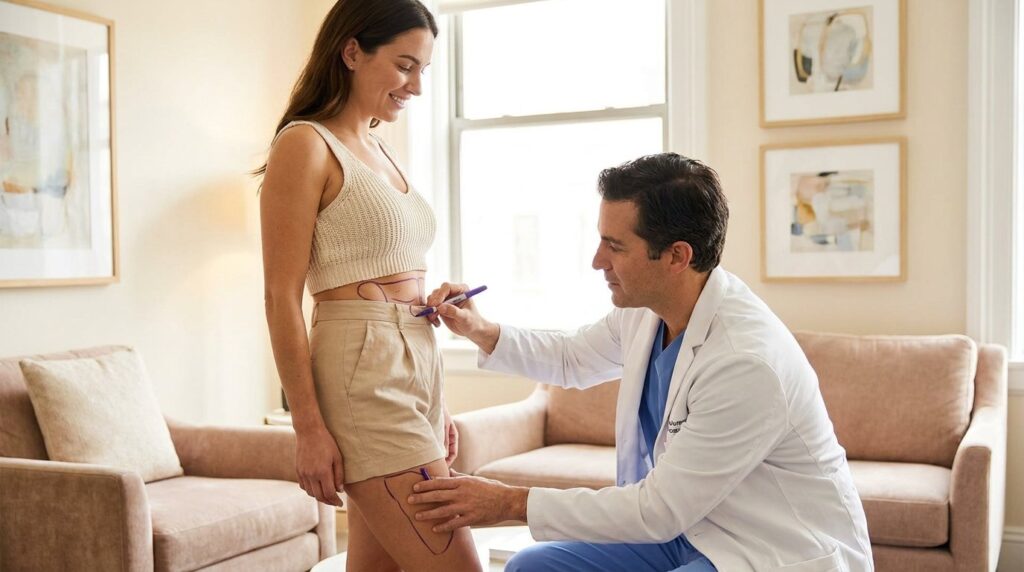
Liposuction is used to remove localised pockets of fat that have not improved enough with diet and exercise. According to the NHS and ASPS, it is a body contouring procedure rather than a weight-loss treatment. That distinction matters, because the same technique can work beautifully in one area and disappoint in another.
The areas most often treated with liposuction are the abdomen, flanks or “love handles,” waist, back, thighs, hips, upper arms, and under the chin. Some surgeons also treat the chest in selected male patients, the pubic area, knees, calves, and ankles, although these smaller or more delicate zones need careful planning. The goal is not simply to remove fat everywhere possible. It is to improve shape while keeping the result smooth and in balance with the rest of the body.
For many patients, the best-response areas are the flanks, upper and lower abdomen, outer thighs, inner thighs, back rolls, and submental area under the chin. These zones often hold stubborn fat in a way that is fairly predictable. They are also areas where even a moderate contour change can be noticeable in clothes.
Areas that need more caution include the front of the thighs, calves, ankles, and areas with thinner skin or less room for swelling. In those spots, aggressive fat removal can make irregularities easier to see. If skin is already loose, liposuction alone may not tighten it enough.
A 2023 paper in Clinics in Plastic Surgery discussed how liposuction is often used around the waist, flanks, lower back, and nearby body areas to shape the overall silhouette when fat transfer to the buttocks is planned. That reflects real surgical practice: treatment areas are chosen not only by where fat sits, but by how each area affects the whole body line.
Abdomen, flanks, waist, back, thighs, upper arms, and under the chin are among the most commonly treated zones.
Calves, ankles, the front of the thighs, and loose-skin areas can be less forgiving and may not suit aggressive fat removal.
If the main issue is loose skin rather than extra fat, a lift or tummy tuck may make more sense than liposuction alone.
Which body areas give the best results, and which have limits?
The best liposuction results usually happen when three things line up: the fat is localised, the skin still has some elasticity, and the patient is already near a stable weight. Mayo Clinic and the NHS both stress that liposuction changes contour, not overall fitness or long-term habits.
The abdomen and flanks are popular because they can create a clearer waistline. Outer thighs can reduce the “saddlebags” look, while inner thighs may help with rubbing and trouser fit. Under-chin liposuction can sharpen the neck-jaw angle in the right patient, although skin quality matters a lot there. If you are interested in that specific area, our article on double chin liposuction swelling and recovery timeline explains how that region settles.
The limits become clearer when skin quality is poor. If the skin is stretched after pregnancy or major weight loss, removing fat can sometimes make looseness look more obvious. In that situation, a patient asking for abdominal liposuction may actually need to discuss skin removal as well. A tummy tuck-based option is often more suitable, and the recovery trade-offs are very different, as explained in abdominoplasty recovery week by week.
There is also a practical limit to how many zones should be treated at once. This is less about a single body map and more about safety, swelling, operating time, and the need for a result that still looks even after healing. A longer plan is not always a better plan.
A 2023 review in Journal of Cosmetic Dermatology noted that cryolipolysis, often called fat freezing, can be an option for small, localised areas in patients who want a non-surgical approach. That does not replace liposuction when larger contour change is needed, but it is a real alternative for selected small zones.
When is liposuction alone enough, and when is a combined procedure better?
This is where many treatment plans change after the consultation. Patients often focus on the area they dislike most, but surgeons look at the reason that area looks the way it does. If fullness comes mainly from fat, liposuction may be enough. If the problem is skin laxity, separated muscles, breast shape, or buttock volume, liposuction alone may leave you under-corrected. Only about a quarter of our liposuction patients have liposuction and nothing else; most add a BBL or a tummy tuck. So if your consultation ends with more than liposuction on the list, that is the normal outcome for this operation rather than an upsell.
For the abdomen, liposuction works best when the skin can shrink back reasonably well. If there is hanging skin, a fold over the lower abdomen, or muscle separation after pregnancy, a tummy tuck can be more effective than suction alone. For the upper arms or thighs, some patients need a lift if skin redundancy is the bigger issue.
Liposuction is also commonly combined with fat transfer. In buttock contouring, fat is removed from donor areas and then grafted to the buttocks. A 2023 article in Clinics in Plastic Surgery described this as an individualised shaping process, not just a simple fat move from one place to another. If that is the direction you are considering, our article on BBL safety and recovery is a useful next read.
Combination surgery can be practical, but it is not automatically the best choice. Longer surgery means more swelling, more recovery overlap, and sometimes more logistical planning if you are travelling. If you are considering more than one procedure during the same trip, combined surgery in Turkey: safety, cost and recovery explains the trade-offs in a clear way.
- ✓Liposuction alone often suits firm, localised fat with decent skin elasticity.
- ✓A tummy tuck may be better when loose abdominal skin or muscle separation is the main issue.
- ✓A lift procedure may be needed when the arms or thighs have significant skin excess.
- ✓Fat transfer can be added when contouring and volume enhancement are both goals.
What are the risks in different liposuction areas and in combined surgery?
Every body area has its own technical challenges. The general risks of liposuction include bleeding, fluid build-up, infection, asymmetry, numbness, contour irregularity, prolonged swelling, and the need for revision. The NHS and Mayo Clinic both emphasise that cosmetic surgery still carries real medical risk, even when the incisions are small.
Some zones are more forgiving than others. The abdomen and flanks are common treatment areas, but they can still develop lumps, firmness, or uneven settling early on. Inner thighs may swell more than patients expect because of friction when walking. Under-chin liposuction is a smaller area, but irregularity or persistent firmness can be quite visible because the neck is always on show.
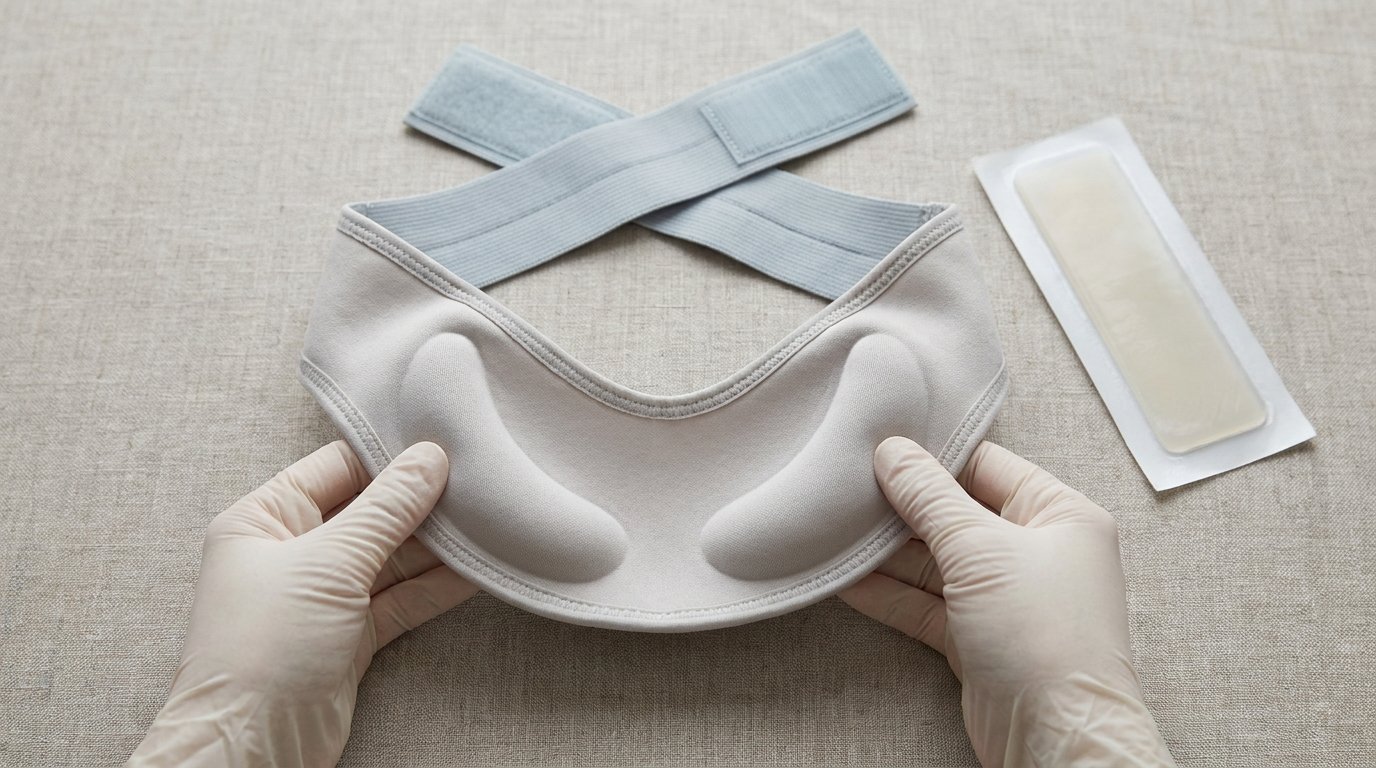
Combined procedures need extra thought. When liposuction is paired with fat transfer, breast surgery, or another operation, recovery gets more layered. You may have more than one compression garment, more position restrictions, and more follow-up needs. The safety question is not just whether each procedure is reasonable on its own, but whether they still make sense together for your health, surgical time, and aftercare plan.
Good clinics do not brush past this. They explain where the scar lines are, how much swelling to expect, who helps you after surgery, and what signs should trigger urgent review. That matters just as much for international patients as the surgery itself.
⚠️ Small area does not mean small decision Even focused liposuction, such as under the chin or inner thighs, can have noticeable contour issues if the plan or aftercare is poor.
🚨 Combined surgery needs stricter judgement Adding procedures can increase complexity, recovery demands, and risk. A safe plan may involve doing less in one session.
How do travel, recovery, and clinic choice affect the treatment areas you can have?
If you are travelling for surgery, the practical side often shapes the plan more than patients expect. The more areas treated, the more swelling, garment use, movement discomfort, and follow-up you may need. That does not mean multi-area liposuction is wrong. It means the itinerary should match the procedure, not the other way round.
Most patients need enough time in the destination country for pre-op review, surgery, early checks, and at least the first stage of swelling management. Compression garments, walking, hydration, and realistic rest days matter. Flying home too soon after a larger body procedure can make a difficult first week even harder.
Cost also varies by plan rather than by a single standard fee. The final quote usually depends on how many areas are being treated, whether the procedure is traditional or energy-assisted, whether fat transfer is added, the hospital setting, anaesthesia, compression garments, medications, follow-up, and whether transfers or hotel stay are included. If you are comparing offers, ask for a written breakdown of what is and is not included. Our article on what an all-inclusive surgery package usually includes can help you compare quotes more clearly.
For surgeon choice, look for recognised training and transparent communication. ASPS patient guidance, BAAPS, and EBOPRAS all reflect the same broad principle: training, patient selection, and aftercare matter more than marketing language. A strong consultation should include discussion of skin quality, realistic contour change, risks, recovery time, and whether your chosen area is truly suitable.
This article is for informational purposes only and does not constitute medical advice. Always consult a qualified surgeon for personalised guidance.
Frequently Asked Questions
References
- 📎ASPS Cosmetic Procedures
- 📎NHS Cosmetic Procedures
- 📎Mayo Clinic Procedures
- 📎Cryolipolysis: A promising nonsurgical technique for localized fat reduction — J Cosmet Dermatol, 2023
- 📎Buttock Augmentation with Fat Grafting — Clin Plast Surg, 2023
- 📎Scarless Enhanced Body Contouring — Aesthetic Plast Surg, 2025
- 📎Autologous Fat Grafting: The Science Behind the Surgery — Aesthet Surg J, 2016
- 📎Combining Gluteal Shaping with High-Definition Liposuction: New Concepts and Techniques — Clin Plast Surg, 2023
Related Articles


You Might Also Like



Related articles

Our specialists
 Clineca SpecialistErkan PinegözPlastic & Reconstructive Surgery
 Clineca SpecialistHakan AktaşPlastic & Reconstructive Surgery
 Clineca SpecialistOrkun UzuneyüpoğluPlastic & Reconstructive Surgery
 Clineca SpecialistSalim İskenderPlastic & Reconstructive Surgery
 Clineca SpecialistEngin SelamioğluPlastic & Reconstructive Surgery
 Clineca SpecialistCem AydınPlastic & Reconstructive Surgery
 Clineca SpecialistAlperen ÖnalEar, Nose & Throat (ENT)