
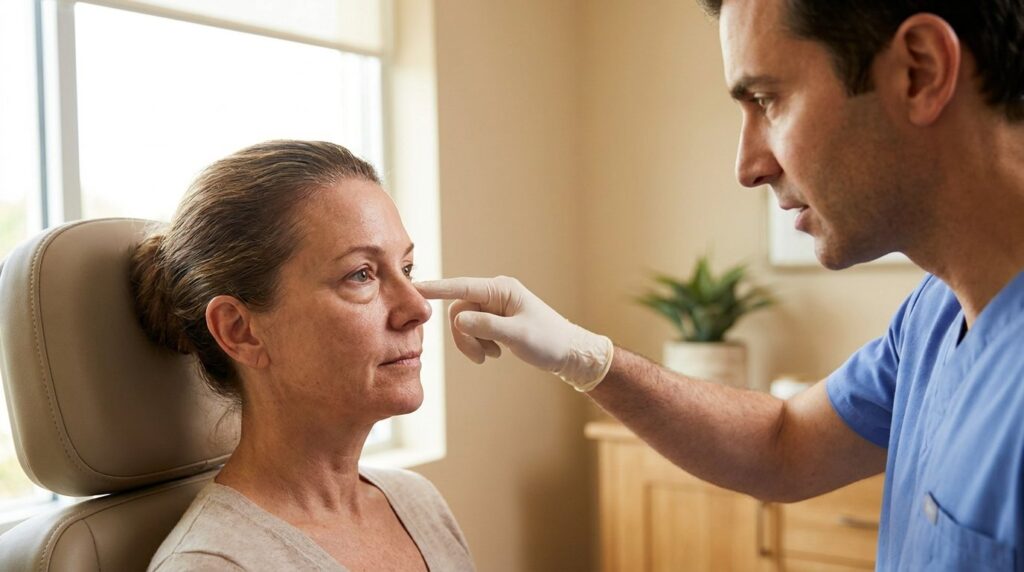
Have a question about Lower Eyelid Blepharoplasty?
In this article
- What is the difference between lower eyelid blepharoplasty and under eye fat transfer?
- Which concerns does each procedure actually treat?
- How do the results look and how long do they usually last?
- What is recovery like for each option?
- What are the risks and safety differences?
- Who is usually a better candidate for one or the other?
- How do cost, travel time and consultation planning differ?
- How do you choose a safe surgeon or clinic for under-eye surgery?
If you have been searching what is the difference between lower eyelid blepharoplasty and under eye fat transfer, you are really asking a more practical question: is the problem extra tissue that needs removing or moving, or is it volume loss that needs filling. The under-eye area ages in more than one way, so two treatments that sound similar can solve very different problems.
What is the difference between lower eyelid blepharoplasty and under eye fat transfer?
Lower eyelid blepharoplasty is surgery on the lower lid. Its main job is to treat eye bags, puffiness, loose skin, or a tired contour caused by bulging fat and age-related laxity. Depending on the anatomy, a surgeon may remove a small amount of fat, reposition fat that is already there, tighten muscle, and trim extra skin.
Under eye fat transfer is different. It uses your own fat, taken from another area of the body, processed, and then injected into hollow areas under the eyes. The goal is not to remove bags but to soften a sunken tear trough, improve a shadowed look, and restore volume that has been lost with age or naturally thin tissue.
In simple terms, lower blepharoplasty is usually a reshaping and tightening procedure, while fat transfer is mainly a volume-restoring procedure. They can overlap in some patients, especially when someone has both a bulge and a hollow, but they are not interchangeable.
The American Society of Plastic Surgeons (ASPS) describes blepharoplasty as eyelid surgery that can improve bags and excess skin around the eyes. ASPS also describes fat grafting as a way to restore fullness using your own fat. Those are two distinct treatment goals, even when both are used around the lower lid area.
Visible under-eye bags, puffiness, loose lower-lid skin, and a crepey or heavy lower eyelid contour.
Hollow tear troughs, volume loss, a shadowed under-eye look, and thin tissue that makes the area look tired.
A person can have eye bags and hollowness at the same time, so a combined plan may sometimes make more sense than choosing only one.
Which concerns does each procedure actually treat?
This is where many people make the wrong comparison. They compare two techniques, when the real issue is diagnosis. A bag is not the same thing as a hollow. One sticks out. The other sinks in. In some faces, a puff above a hollow creates the strongest tired look, which is why the area can be tricky.
Lower blepharoplasty is more useful when the problem is structural. That means fat pads pushing forward, skin laxity, or a weak lower lid that needs support. In some patients, the surgeon works through an incision just inside the eyelid, called a transconjunctival approach, especially when the main issue is fat bulging without much loose skin. In others, an external incision just below the lashes is used when skin tightening is also needed.
Under eye fat transfer is more useful when the main issue is deflation. The goal is to smooth the transition from the lower eyelid to the cheek. It can help when fillers are not ideal, when a patient prefers their own tissue, or when the hollow extends beyond the tear trough into the upper cheek.
A useful rule is this: if makeup settles into a hollow and lighting creates a dark groove, volume may be part of the answer. If the lower lids look puffy even in soft lighting, surgery may be part of the answer. Many surgeons assess both standing and smiling, because some bags and lid weakness show up more clearly with expression.

- ✓Choose assessment over assumptions: bags, hollows, loose skin and cheek volume loss often coexist.
- ✓Photographs in flat front lighting and angled lighting help show whether the issue is bulging, shadowing, or both.
- ✓If you have dry eye, lid laxity, thyroid eye disease, or previous eyelid surgery, the plan needs extra care.
- ✓A non-surgical filler test is not the same as surgical planning, but it may reveal whether added volume helps the look.
How do the results look and how long do they usually last?
Lower blepharoplasty tends to give a more defined change when true eye bags are the problem. It can reduce puffiness and improve the lower-lid contour in a way fat transfer alone usually cannot. The result is often longer lasting because it addresses the anatomy causing the bulge, although ageing continues and tissues still change over time.
Under eye fat transfer can look very natural in the right patient, particularly when the area is hollow rather than puffy. But fat is a living graft. Some of it usually survives long term, some of it does not, and survival can vary from person to person and from one side of the face to the other. That is why surgeons often discuss the possibility of touch-ups rather than promising a fixed, exact final volume.
The peer-reviewed literature in journals such as Aesthetic Surgery Journal and Plastic and Reconstructive Surgery generally supports fat grafting as a useful tool for facial volume restoration, but also notes variability in graft take and technique. In practice, that means fat transfer can be excellent for softness and blending, yet it is less predictable than simply removing a small pocket of protruding fat.
If your main complaint is, “I still look tired because of bags,” fat transfer may disappoint if it does not address the bulge itself. If your complaint is, “The area looks sunken and shadowed,” blepharoplasty alone can sometimes leave you looking flatter but not fully refreshed. The best result often depends less on the label of the procedure and more on whether the plan matches the actual cause of the problem.
📋 Longevity is not identical to perfection A longer-lasting procedure is not automatically the better choice. The right procedure is the one that treats the feature that bothers you most.
What is recovery like for each option?
Recovery is usually different in feel and in timing. Lower blepharoplasty often brings more swelling and bruising early on around the lids, especially if skin tightening was done. Eyes can feel tight, watery, dry, or sensitive for a while. Most people look noticeably improved within a couple of weeks, but subtle swelling can take longer to settle, and final refinement can keep improving over several months.
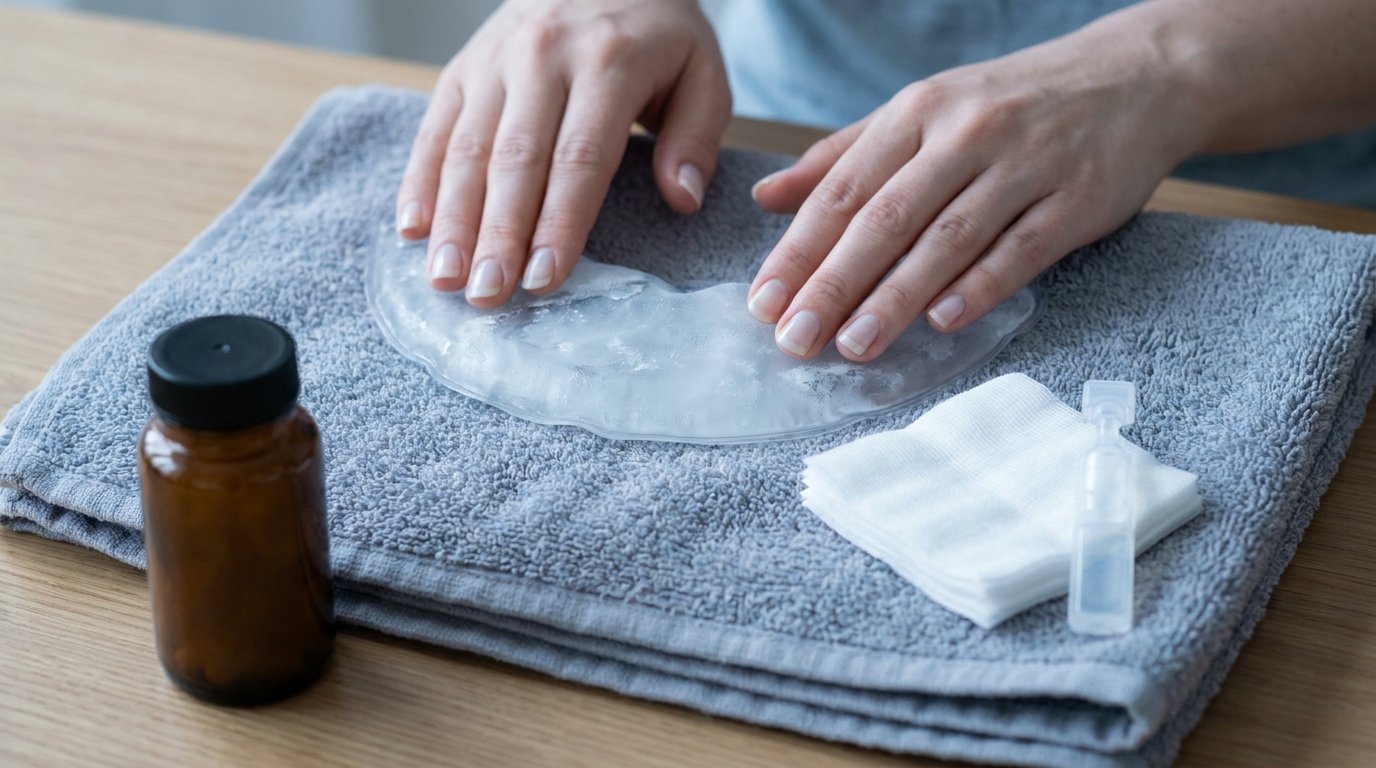
Under eye fat transfer recovery can seem simpler at first because the treatment is done with small injections, but it still has its own downtime. The under-eye area often swells easily, and the donor area where the fat was taken can also feel bruised or sore. Some patients look puffy for longer than they expected because part of the early fullness is swelling, not the final result.
The exact timeline depends on technique and on the patient. A transconjunctival lower blepharoplasty without skin removal may recover faster than an external lower blepharoplasty with skin tightening. Likewise, a small, careful fat transfer to a mild hollow may settle sooner than a larger-volume treatment extending into the cheek.
The NHS notes that bruising and swelling are common after cosmetic eyelid surgery. Mayo Clinic patient information on eyelid surgery also describes temporary blurred vision, watering, sensitivity to light, and swelling as expected short-term effects after the procedure. Those are the kinds of practical issues worth planning around if you are travelling.
What are the risks and safety differences?
Both procedures can be safe in experienced hands, but their risk profiles are not the same. Lower blepharoplasty carries the usual surgical risks such as bleeding, infection, asymmetry, scarring, and dissatisfaction with contour. Specific eyelid risks include dry eye symptoms, lid retraction, difficulty closing the eye fully, ectropion, which is an outward pulling of the lid, and changes in the lid shape if too much skin is removed or the lid is not well supported.
Under eye fat transfer avoids a skin incision in the lower lid, but it is not a minor beauty treatment that should be taken lightly. Common issues include unevenness, lumps, under-correction, overfilling, prolonged swelling, and partial loss of the transferred fat. There are also rare but serious complications linked to facial fat injection, including vascular blockage if fat enters a blood vessel. In severe cases this can cause skin injury, vision loss, or stroke-like events. Reviews in journals including Aesthetic Surgery Journal and Facial Plastic Surgery & Aesthetic Medicine discuss these complications as uncommon but important, especially around high-risk facial zones.
That does not mean fat transfer is unsafe overall. It means the injector’s knowledge of facial anatomy, plane of injection, cannula technique, and case selection matters enormously. The same is true for eyelid surgery, where millimetres make a difference.
If you already have dry eye, thyroid eye disease, major asymmetry, a history of filler complications, or previous under-eye surgery, that should be part of the planning conversation from the start. Patients with unrealistic expectations also need careful counselling, because the under-eye area is one of the face’s least forgiving zones.
⚠️ Rare but serious fat-transfer risk Facial fat injection can rarely cause vascular occlusion, including vision-threatening complications, if fat enters a blood vessel. This is one reason surgeon experience and careful technique matter so much around the under-eye area.
⚠️ Lower-lid support matters If you have lid laxity or dry eye, a surgeon may need to adjust the plan to reduce the risk of eyelid malposition after lower blepharoplasty.
Who is usually a better candidate for one or the other?
A good candidate for lower blepharoplasty is usually bothered by bags, lower-lid skin excess, or a puffy contour that does not improve with sleep, skincare, or makeup. The eyes should also be assessed for lid tone, tear production, and general eye health. Surgeons often ask about contact lens use, dry eye symptoms, previous laser treatments, and any past eyelid procedures.
A good candidate for under eye fat transfer usually has a hollow or volume-deficient under-eye area, enough donor fat elsewhere on the body, and realistic expectations about variability. Skin quality still matters. If the skin is very thin, crepey, or lax, adding volume alone may not solve the whole problem.
Age by itself does not decide this. A younger patient can need lower blepharoplasty if hereditary bags are the issue. An older patient can be better suited to volume restoration if the main problem is deflation rather than protrusion.
Sometimes the better answer is neither of these on their own. Some patients are more suited to lower blepharoplasty with fat repositioning, where existing under-eye fat is moved to fill a hollow. Others may benefit from lower blepharoplasty plus a small amount of fat grafting into the lid-cheek junction. If you are reading about options, the most useful next step is often a focused assessment rather than trying to force your face into one procedure label.
If you want background reading on eyelid surgery itself, the clinic’s educational page on eyelid surgery may help with terminology, but the decision between these two approaches still depends on individual anatomy and examination.
Picking it only because it sounds less invasive, when the real issue is bulging fat pads, often leads to an incomplete result.
Choosing surgery just to avoid the unpredictability of fat survival can miss the point if the under-eye problem is mainly hollowing.
How do cost, travel time and consultation planning differ?
Cost should be discussed as part of the whole treatment plan, not as a simple one-line comparison. Lower blepharoplasty may involve surgeon fees, anaesthesia, theatre use, garments or eye care supplies, prescribed medicines, and follow-up appointments. Under eye fat transfer can include not only the facial treatment but also the donor-site procedure, processing of the fat, and review visits. A personalised quote is normally confirmed after consultation because the price depends on anatomy, technique, whether other procedures are combined, and the level of aftercare included.
For international patients, length of stay matters just as much as the quote. Lower blepharoplasty usually needs enough time in the country for pre-op assessment, the procedure itself, and at least early follow-up while swelling and lid position are checked. Fat transfer also needs follow-up, but travel planning should include the donor area as well as the face. Either way, flying home too quickly can make early review difficult if swelling, bruising, or asymmetry needs checking.
Ask what your quotation includes in practical terms. This often matters more than the headline figure. You want to know whether pre-operative tests, medications, airport transfers, hotel support, and follow-up visits are included, and who handles aftercare once you return home.
If you are comparing providers in Turkey, keep the clinic conversation factual. Ask about the operating surgeon’s training, whether they are listed on the provider’s doctors page, how lower-lid assessment is done, and what the follow-up pathway looks like for overseas patients. If you plan to request an opinion, using a formal consultation request is more useful than asking for a price alone, because under-eye treatment decisions depend heavily on photographs and medical history.
How do you choose a safe surgeon or clinic for under-eye surgery?
Start with qualifications and case fit, not marketing. Eyelid surgery and under-eye fat transfer both need a surgeon who works regularly in facial anatomy, understands lower-lid support, and can explain why one option suits you better than another. If every patient seems to receive the same recommendation, that is not a good sign.
Professional bodies are useful here. BAAPS and EBOPRAS are not guarantees of outcome, but they are relevant points to check alongside registration, training history, and before-and-after evidence. For objective patient information, ASPS and the NHS both explain that cosmetic eyelid procedures should only be undertaken after careful discussion of benefits, risks, alternatives and recovery.
During consultation, look for precision. A strong assessment should include your lid tone, skin quality, cheek support, eye dryness, past filler history, and whether the real concern is protrusion, hollowing, pigmentation, or all three. Good planning is often more specific than the procedure name itself.
You should also ask who would perform each part of treatment if fat transfer is proposed, where the fat would be harvested from, what technique is used around the orbit, and what happens if the result is uneven or not full enough after healing. Those are not awkward questions. They are exactly the right questions.
If you need basic background on the provider rather than the procedure, information should remain secondary to your medical decision and can be checked on the about page or by contacting the team directly through the contact page.
- →Ask for the diagnosis, not just the treatment name: You want to hear whether your main issue is bulging fat, hollowing, loose skin, lid laxity or a combination.
- →Ask about surgeon training and board standards: Check relevant specialist background and whether facial eyelid work is a regular part of practice.
- →Ask to see comparable cases: Look for patients with a similar starting anatomy, not only dramatic before-and-after photos.
- →Ask about complication planning: A careful team should explain how they monitor lid position, swelling, asymmetry and rare injection risks.
Frequently Asked Questions
References
- 📎ASPS Cosmetic Procedures: Eyelid Surgery
- 📎ASPS Cosmetic Procedures: Fat Transfer
- 📎NHS: Cosmetic procedures
- 📎PubMed search: lower eyelid blepharoplasty fat grafting under eye complications review
Related Articles


You Might Also Like


Related articles


Our specialists
 Clineca SpecialistErkan PinegözPlastic & Reconstructive Surgery
 Clineca SpecialistHakan AktaşPlastic & Reconstructive Surgery
 Clineca SpecialistOrkun UzuneyüpoğluPlastic & Reconstructive Surgery
 Clineca SpecialistSalim İskenderPlastic & Reconstructive Surgery
 Clineca SpecialistEngin SelamioğluPlastic & Reconstructive Surgery
 Clineca SpecialistCem AydınPlastic & Reconstructive Surgery
 Clineca SpecialistAlperen ÖnalEar, Nose & Throat (ENT)