

Have a question about Lip Lifting?
In this article
- How long does swelling usually last after a lip lift?
- What is normal in the first days and weeks?
- Why does lip lift swelling sometimes seem to last longer than expected?
- When should you worry instead of waiting it out?
- What actually helps swelling go down faster?
- When does the lip start to look close to the final result?
- What should you ask your surgeon before booking a lip lift abroad?
If you are asking how long does lip lift swelling last, the hard part is that there is no single calendar that fits everyone. A lip lift is a small operation in a very visible part of the face, so even mild swelling can feel dramatic at first and then seem to linger longer than expected.
How long does swelling usually last after a lip lift?
For most patients, lip lift swelling is most noticeable in the first several days, improves clearly over the first two weeks, and then settles more gradually over the following weeks. That does not mean the lip looks fully “final” at two weeks. It means the heavy puffiness is usually past its peak by then.
A useful way to think about recovery is in layers. The obvious swelling that other people notice tends to ease first. The last small amount of firmness, tightness, and uneven puffiness around the incision can take longer. In facial plastic surgery, this slower phase is normal because the skin under the nose is thin, mobile, and constantly moving when you speak, smile, eat, or brush your teeth.
Published facial surgery literature supports this kind of staged recovery rather than a one-size-fits-all deadline. Reviews and case series in journals such as Aesthetic Plastic Surgery and Facial Plastic Surgery & Aesthetic Medicine describe early swelling as expected in the first days to weeks, with scar and soft-tissue settling continuing for longer. The NHS also notes that cosmetic surgery swelling and bruising often improve in the early weeks but may take longer to fully settle depending on the procedure and the person.
Technique matters too. A subtle subnasal lip lift with limited skin removal may calm down faster than a larger lift, a revision case, or surgery combined with another facial procedure. That last case is the common one: seven in ten of our lip lift patients have another facial procedure alongside it, such as a temporal lift, eyelid surgery or rhinoplasty. If that is your plan, the swelling you are watching belongs to the whole face rather than the lip alone. Your own anatomy matters as well. Thick skin, a tendency to scar firmly, easy bruising, smoking, and returning to activity too soon can all make swelling last longer.
If you are also deciding whether surgery is the right option for a long upper lip, our article on lip lift vs filler for a longer upper lip helps explain the trade-offs.
📋 A common worry Patients often think persistent swelling means something went wrong. In many cases, it simply means the deeper tissues have not fully settled yet.
What is normal in the first days and weeks?
The first week is usually the most emotionally difficult, not necessarily because the pain is severe, but because the lip can look larger, tighter, or less natural than expected. This is common. The upper lip may look short, stiff, and slightly lifted too much during the swelling phase. That early look is not the final result.
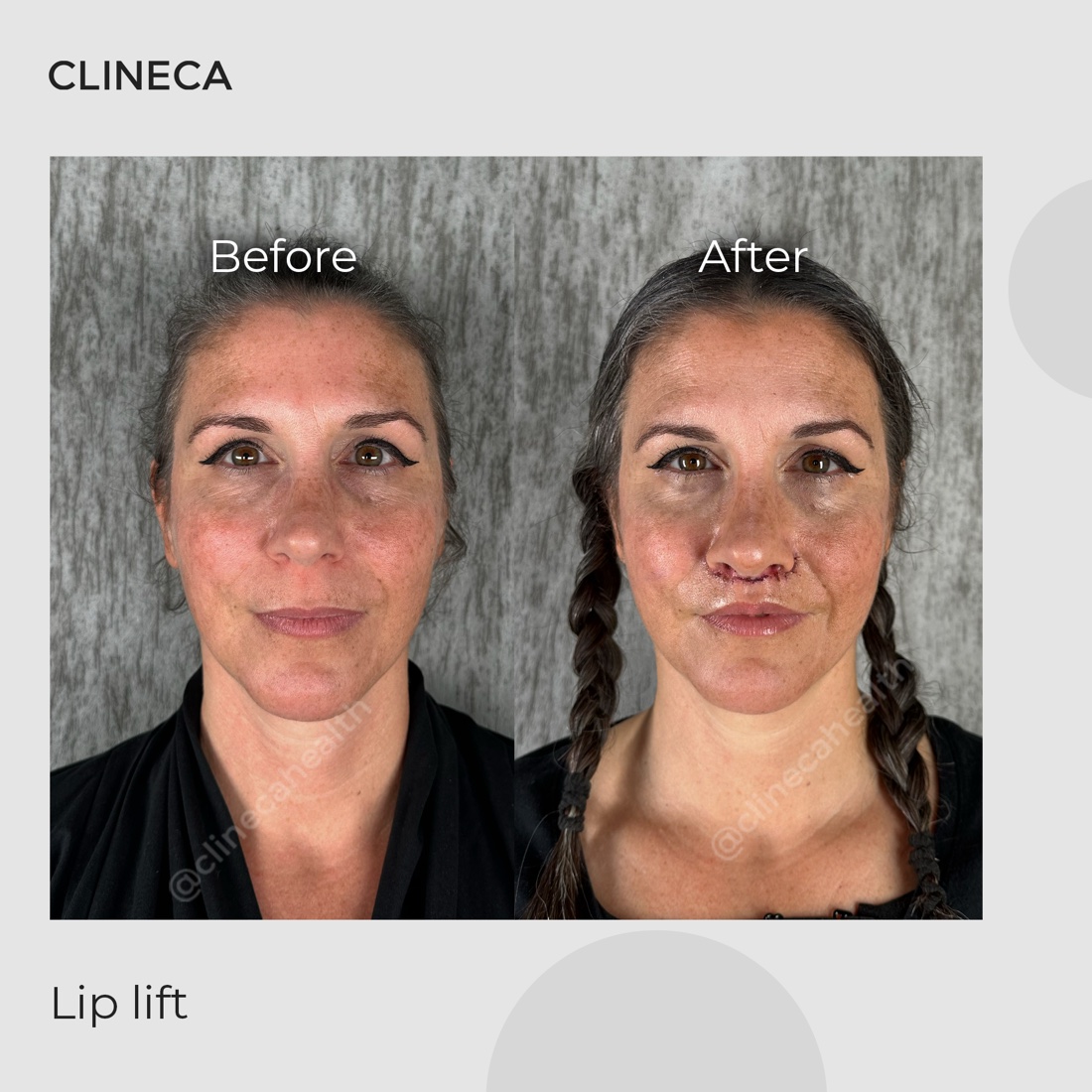
Bruising is variable. Some people have very little, while others get yellow or purple bruising near the base of the nose or upper lip. Mild unevenness from one side to the other is also common early on. Swelling rarely goes down in a perfectly even way.
By the second week, many people feel more comfortable being seen in public, especially if sutures are out and bruising has faded. Even then, the lip may still feel hard when you touch it, and smiling can still feel restricted. That firmness is often part swelling, part scar tissue formation.
Signs that are usually normal
- ✓Tightness when smiling or speaking
- ✓Mild asymmetry that changes day to day
- ✓A lip that looks slightly too full or too short early on
- ✓Numbness or altered feeling near the incision
- ✓More morning swelling than evening swelling
These short-term changes fit with the normal healing pattern seen across facial procedures. The Mayo Clinic’s general post-procedure guidance also notes that swelling commonly peaks early and then improves progressively rather than disappearing all at once.
If you are still at the stage of deciding whether you are a good candidate, this lip lift candidacy article is more helpful than looking at recovery photos alone, because it explains which anatomy tends to benefit most.
- ✓Tightness when smiling or speaking
- ✓Mild asymmetry that changes day to day
- ✓A lip that looks slightly too full or too short early on
- ✓Numbness or altered feeling near the incision
- ✓More morning swelling than evening swelling
Why does lip lift swelling sometimes seem to last longer than expected?
The lip is a high-motion area, so healing is not just about the size of the incision. Every meal, laugh, sip from a straw, wide smile, and strong facial expression asks that area to move. That can keep the tissues irritated for longer, even when the wound itself is healing normally.
Surgical technique is one reason timelines differ. A conservative skin excision may settle faster than a more aggressive lift. If the surgeon had to manage asymmetry, scar quality, or prior filler, the tissues may react differently. Revision surgery can also stay swollen longer because the body is healing through tissue that has already been altered before.
Your own healing style matters just as much. Some people hold swelling for longer in the face. Others form firmer scar tissue under the skin, which can feel like swelling even after the obvious puffiness has gone down. Smoking, nicotine exposure, heavy exercise too early, high-salt meals, poor sleep, and sleeping flat can all make the upper lip look puffier.
A practical point many patients miss is that the scar under the nose can create a visual illusion. Even when most swelling has improved, the area can still look “stiff” because the scar is maturing. In facial scar healing, redness and firmness often outlast visible swelling. That distinction matters, because it changes what kind of aftercare actually helps.
When should you worry instead of waiting it out?
Most swelling is routine, but a few patterns deserve a proper review. The biggest concern is not simply that the lip is swollen. It is swelling that is getting worse rather than better, especially if that comes with spreading redness, heat, pus, bad smell, fever, or one-sided throbbing pain.
A small amount of asymmetry is common at first. A rapidly growing one-sided lump is different. That could be a collection of blood, called a haematoma, or less commonly a developing infection. Both need prompt contact with your surgeon or treating team.
The NHS advises people recovering from cosmetic surgery to seek medical advice if they develop increasing pain, abnormal discharge, or signs of infection. In facial plastic surgery papers discussing lip lift complications, the more common issues described are scar concerns, asymmetry, and under- or over-correction, while acute infection is less common but still important not to ignore.
Red flags that should not be dismissed
- ✓Swelling that increases sharply after initially improving
- ✓Significant heat, redness, or pus at the incision
- ✓Fever or feeling unwell overall
- ✓Sudden one-sided bulging or marked dark bruising under tension
- ✓Difficulty opening the mouth because pain is escalating, not easing
If any of these happen while you are abroad for surgery, do not rely only on messaging and photos if the team advises an in-person review. Fast assessment matters more than convenience.
⚠️ Do not judge the result during active swelling An upper lip that looks too short, too high, or uneven in the first days is not enough on its own to diagnose a bad result.
🚨 Get reviewed promptly Worsening swelling with redness, discharge, fever, or a growing one-sided lump needs direct medical assessment.
- ✓Swelling that increases sharply after initially improving
- ✓Significant heat, redness, or pus at the incision
- ✓Fever or feeling unwell overall
- ✓Sudden one-sided bulging or marked dark bruising under tension
- ✓Difficulty opening the mouth because pain is escalating, not easing
What actually helps swelling go down faster?
You cannot force swelling to disappear, but you can avoid making it worse. The basics are simple and usually more effective than elaborate routines: rest, keep your head elevated, follow the cleaning plan exactly, avoid smoking and nicotine, and do not stretch the lip more than necessary in the first part of recovery.

Cold compresses may help in the first day or two if your surgeon recommends them, but they should be used carefully and never pressed hard onto the incision. After that very early window, patience matters more than icing. Over-handling the area, repeatedly checking the scar, or trying home remedies not approved by your surgeon can irritate the tissue.
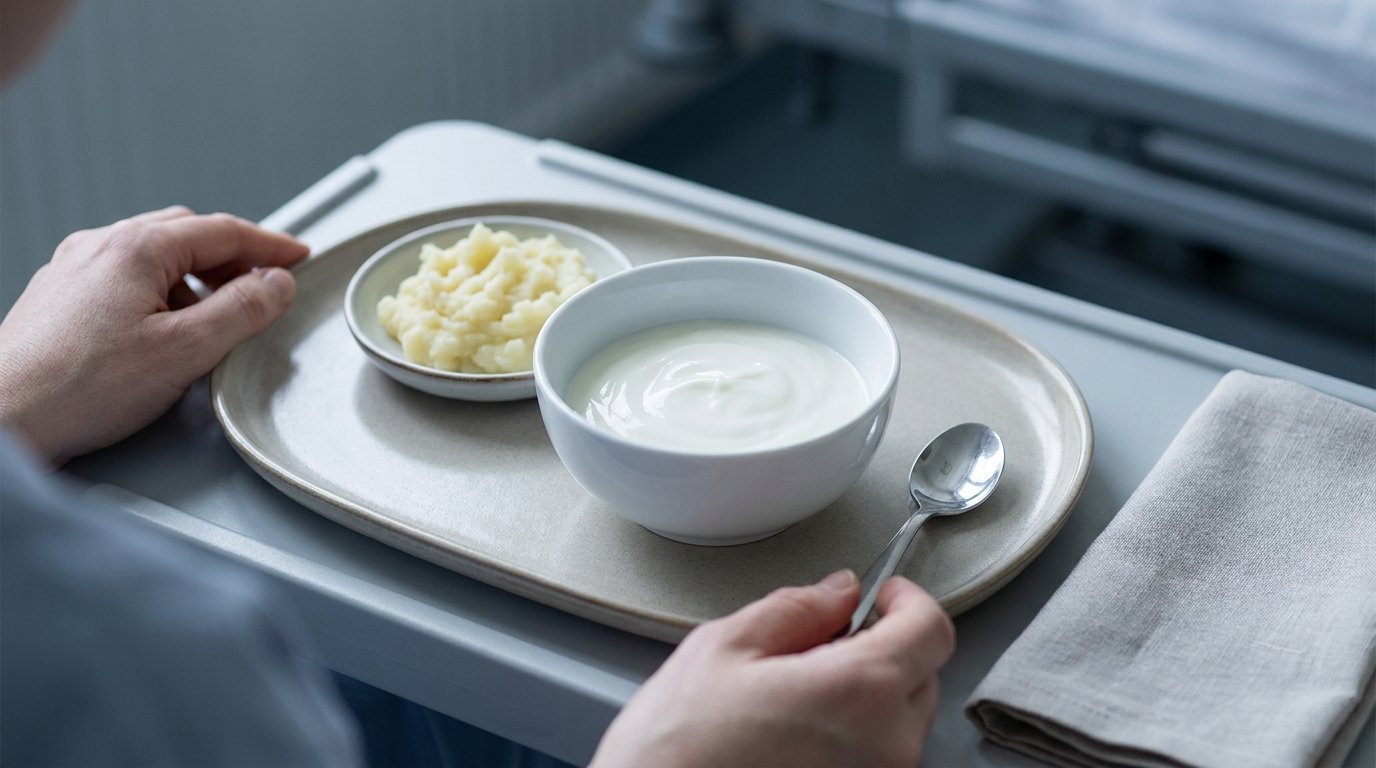
Try to eat foods that do not force wide mouth opening for the first several days. Soft foods help because they reduce repetitive strain, not because there is a special diet that “cures” swelling. Good hydration, lower salt intake, and avoiding alcohol early on may also help some patients feel less puffy.
For travel patients, planning matters. Even though a lip lift is smaller than many other facial operations, it is still wise to stay long enough for the first review and suture management plan advised by your surgeon. If you are arranging treatment abroad, our article on what is included in an all-inclusive surgery package explains the practical points to confirm before you book, such as transfers, follow-up, and who to contact after hours.
Head elevation, soft foods, low strain on the lip, careful wound care, and stopping nicotine usually support smoother recovery.
Smoking, early workouts, repeated lip stretching, heavy pressure on the incision, and self-prescribed creams can keep the area puffy for longer.
When does the lip start to look close to the final result?
Many patients start to see the intended change once the first two to six weeks have passed, but “close to final” is not the same as final. The lip often looks broadly understandable before it looks fully settled. That is why early opinions from friends, family, or online forums can be misleading.
The scar under the nose usually matures on a slower clock than the swelling itself. Even when the lip shape looks much better, the incision can still be pink, firm, or slightly raised for longer. That longer scar phase is well recognised in facial surgery healing and should be part of the conversation before surgery, not a surprise afterwards.
If your surgeon recommends scar care, massage, or silicone-based scar support, the timing should match the wound-healing stage rather than start too early. Following your own aftercare plan matters more than copying a general timeline from someone else online.
Patients who want the most realistic frame of mind usually do best when they judge recovery in stages: first the swelling settles, then the movement softens, then the scar matures. Those are related, but they are not the same process.
What should you ask your surgeon before booking a lip lift abroad?
If swelling is the part you are most anxious about, ask very specific questions before you travel. General reassurance is not enough. You want to know the expected swelling pattern for the technique being used on you, when the first in-person check happens, and how concerns are handled once you return home.
A useful quote should explain what the fee includes, what follow-up is included, and whether scar care or revision policy is discussed in advance. The final cost depends on the surgeon’s approach, the complexity of your anatomy, whether the procedure is combined with another facial surgery, and the aftercare structure around it. A personalised price is normally confirmed after consultation and photo review.
For safety, look for a surgeon with recognised specialist training in plastic or facial plastic surgery, a clear clinic pathway for aftercare, and honest pre-op counselling about scars and healing variation. BAAPS, EBOPRAS, ASPS, and the NHS all stress the importance of proper credentials, informed consent, and understanding recovery before cosmetic surgery.
Good organisation matters almost as much as the operation itself for travel patients. Fast replies, clear instructions, and a named contact for post-op concerns can reduce a lot of anxiety during the swelling phase.
Frequently Asked Questions
References
- 📎NHS cosmetic procedures guidance
- 📎ASPS cosmetic procedures
- 📎PubMed: upper lip lift complications outcomes scar aesthetic plastic surgery
- 📎PubMed: facial plastic surgery upper lip lift recovery swelling scar
Related Articles


You Might Also Like



Related articles

Our specialists
 Clineca SpecialistErkan PinegözPlastic & Reconstructive Surgery
 Clineca SpecialistHakan AktaşPlastic & Reconstructive Surgery
 Clineca SpecialistOrkun UzuneyüpoğluPlastic & Reconstructive Surgery
 Clineca SpecialistSalim İskenderPlastic & Reconstructive Surgery
 Clineca SpecialistEngin SelamioğluPlastic & Reconstructive Surgery
 Clineca SpecialistCem AydınPlastic & Reconstructive Surgery
 Clineca SpecialistAlperen ÖnalEar, Nose & Throat (ENT)