
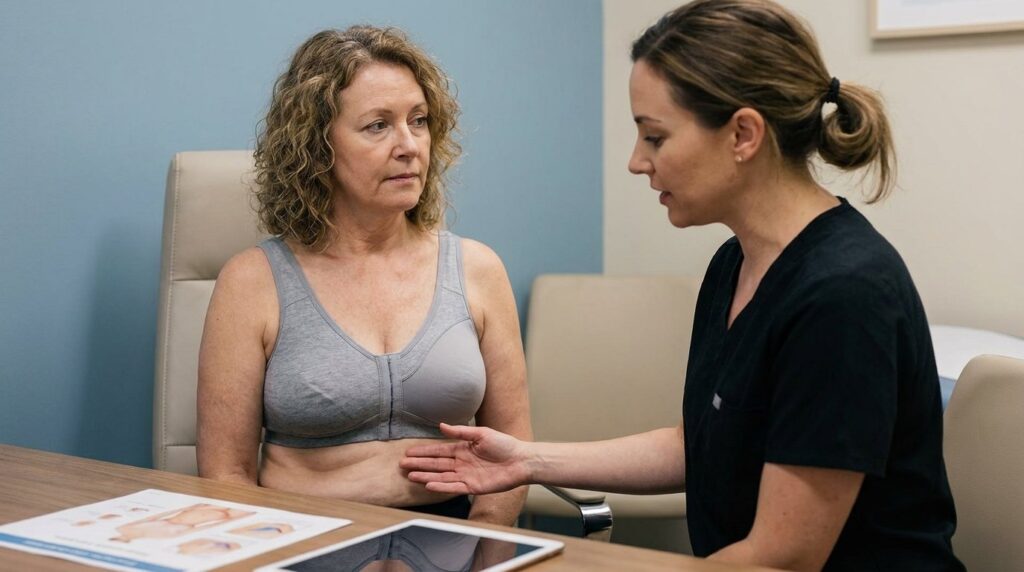
Have a question about Breast Reconstruction?
In this article
- Who is usually a candidate for breast reconstruction after mastectomy?
- What factors decide whether reconstruction is right for you now, later, or not at all?
- How do immediate and delayed reconstruction differ?
- Would implants or your own tissue make more sense for you?
- What tests and specialist reviews are usually needed before you are confirmed as a candidate?
- What is recovery really like, and how long do international patients usually need to stay?
- How should you think about cost, safety, and choosing a surgeon or clinic?
If you are asking, am i a candidate for breast reconstruction after mastectomy, the honest answer is that many women are, but the right option depends on cancer treatment, body shape, health, and personal priorities. This decision is rarely just about the breast itself. It also involves timing, safety, recovery, and what will fit best with the rest of your treatment and daily life.
Who is usually a candidate for breast reconstruction after mastectomy?
Many people who have had, or are planning, a mastectomy can be considered for breast reconstruction. In broad terms, reconstruction may be possible at the same time as the mastectomy (immediate reconstruction) or months or years later (delayed reconstruction). The NHS explains that reconstruction is an option for many women after breast cancer surgery, but not everyone should have it straight away, and some may decide not to have it at all.
A practical answer-first summary is this: women are often eligible if their cancer treatment plan allows it, they are well enough for surgery, and they understand the trade-offs between implant-based and tissue-based reconstruction. Common reasons to delay include planned radiotherapy, uncontrolled medical problems, active smoking or nicotine use, and situations where the cancer team wants the chest to heal first. Immediate and delayed reconstruction can both be appropriate, but the best timing should be decided with the breast surgeon, plastic surgeon, and cancer team together.
The strongest candidates are usually those who have a clear cancer-treatment plan, realistic expectations, and enough physical and emotional reserve for another operation. Age on its own does not rule someone in or out. What matters more is overall health, wound-healing ability, and whether reconstruction will interfere with cancer care.
According to the American Society of Plastic Surgeons (ASPS), reconstruction can use implants or your own tissue taken from another part of the body, and each method has benefits and limits. That is why being a “candidate” is not a simple yes-or-no label. It means there is a safe and sensible pathway worth discussing in detail with the multidisciplinary team.
📋 A candidate does not mean one standard operation You may be suitable for reconstruction, but not for every type. Some women are better suited to implants, while others are better suited to reconstruction using their own tissue.
What factors decide whether reconstruction is right for you now, later, or not at all?
The first major factor is your cancer treatment plan. If radiotherapy is likely, timing becomes more complex. Radiotherapy can increase the risk of hardening around an implant, shape changes, wound-healing problems, and poorer cosmetic results. That does not mean reconstruction is impossible, but it may push the team toward delayed reconstruction, staged reconstruction, or a tissue-based approach in selected cases.
The second factor is your general health. Diabetes that is not well controlled, severe obesity, poor nutrition, circulation problems, or conditions that affect healing can all raise the risk of infection, wound breakdown, or further surgery. The NHS and NICE both stress that reconstructive planning should take account of overall health, likely complications, and patient preference.
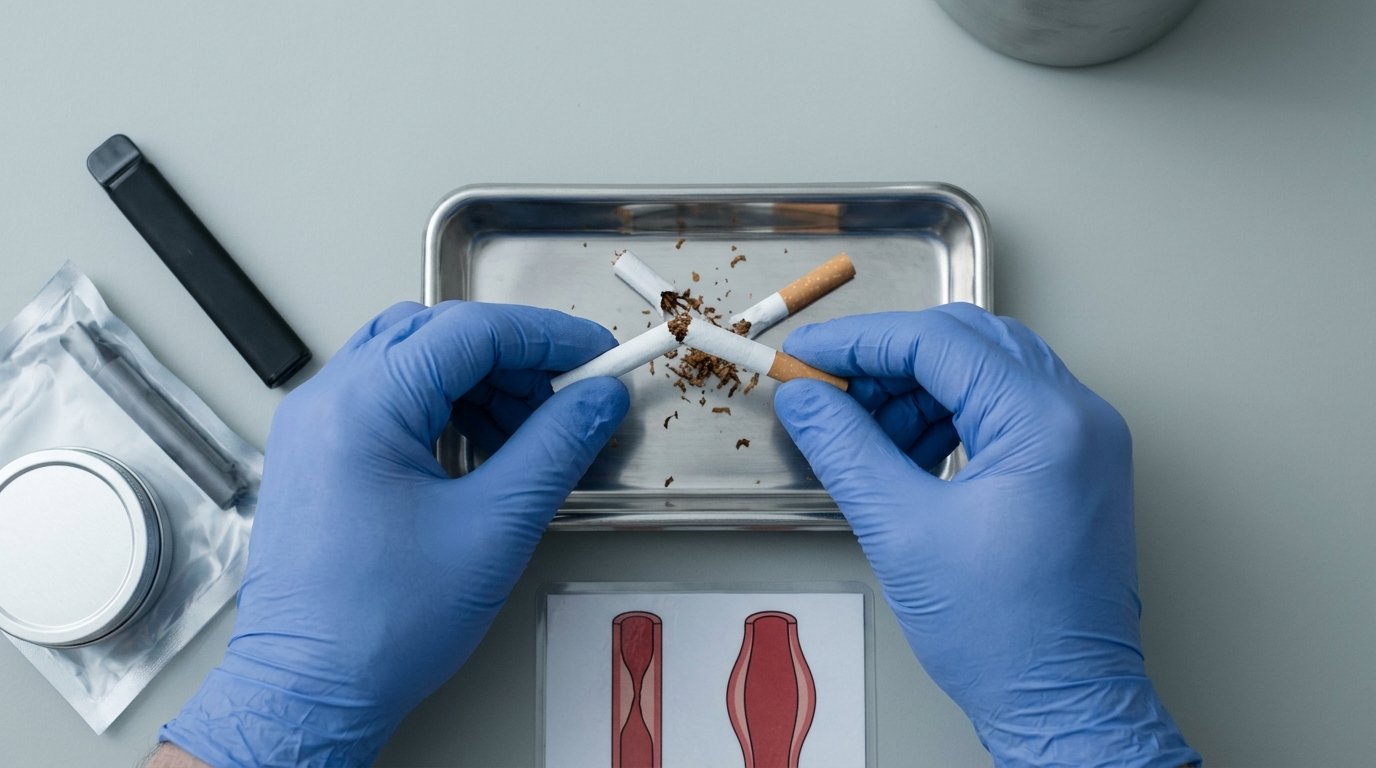
Nicotine deserves special attention. Smoking is a known risk for poor healing, but this also applies to vaping with nicotine, nicotine pouches, and nicotine replacement in some surgical pathways, because nicotine narrows blood vessels and can reduce blood flow to healing tissue. This matters even more for flap surgery, where the reconstructed breast depends on a good blood supply. Many surgeons therefore ask patients to stop nicotine completely for a period before and after surgery.
Body shape also matters. If you are very slim, there may be less spare tissue for a flap from the tummy, thigh, or back. If you have had previous abdominal surgery, some flap options may be less suitable. If your breasts were large before mastectomy, one-stage implant reconstruction may be less straightforward, and balancing procedures on the other breast may need to be discussed.
Then there is the personal side. Some women want to wake up with a breast shape in place and strongly prefer immediate reconstruction. Others want to finish cancer treatment first and make decisions later, when life feels less intense. Neither approach is more “correct.” The right choice is the one that fits your treatment plan and your own priorities.
Stable general health, a clear oncology plan, realistic expectations, and the ability to stop nicotine all make reconstruction planning easier.
Planned radiotherapy, uncontrolled diabetes, active nicotine use, major healing risks, or uncertain cancer margins may mean waiting is safer.
How do immediate and delayed reconstruction differ?
Immediate reconstruction happens during the same operation as the mastectomy. For many women, the main appeal is obvious: there is less time without a breast shape, and it can reduce the sense of loss after breast removal. In the right patient, it may also mean fewer separate operations overall.
Delayed reconstruction is done after the mastectomy has healed and, if needed, after chemotherapy or radiotherapy is completed. This can be a calmer route medically and emotionally. It gives the cancer team time to finish treatment and allows the reconstructive plan to be based on how the chest wall has healed.
Neither approach is automatically better. If radiotherapy is likely, delayed reconstruction is often discussed more seriously because radiation can affect the final result and complication rate, especially with implants. In some cases, a staged plan is used. For example, a temporary tissue expander may be placed first, with a more definitive reconstruction later.
NICE guidance on early and locally advanced breast cancer supports offering information about reconstruction options, including timing, so patients can make an informed choice. That means your suitability for immediate reconstruction should not be judged in isolation. It should be reviewed in the full context of cancer treatment, likely radiotherapy, and your priorities.
Would implants or your own tissue make more sense for you?
This is one of the biggest parts of the candidacy question. Implant reconstruction usually involves a shorter operation and often a simpler early recovery than flap reconstruction. For some women, that makes it attractive, especially if they do not want surgery on another part of the body.
But implants have their own limits. They can feel firmer, may not change naturally with body weight, and can be more affected by radiotherapy. The ASPS notes risks such as infection, implant loss, hard scar tissue around the implant, and the possibility of future revision surgery.
Reconstruction with your own tissue, often called a flap, uses skin and fat from areas such as the abdomen, back, thigh, or buttock. This usually creates a softer, more natural-feeling breast and may tolerate radiotherapy better in some cases. The trade-off is a longer operation, a longer recovery, and scars at the donor site as well as the breast.
A flap is not automatically the “better” option. It is more demanding surgery. Blood supply to the tissue has to be protected, which is why nicotine use, circulation issues, and some medical conditions matter so much. Some women are not good flap candidates because they do not have enough donor tissue or they have had prior surgery that changes the anatomy.
If you are still comparing methods, it can help to read a neutral overview of breast reconstruction options, then bring your questions to a consultation. The goal is not to choose the most advanced-sounding operation. It is to choose the method that best matches your cancer pathway, anatomy, and tolerance for recovery.
- ✓Implants often mean shorter initial surgery but may be less forgiving after radiotherapy.
- ✓Flap reconstruction can look and feel more natural, but recovery is usually longer and surgery is more complex.
- ✓Previous operations, body shape, and nicotine use can strongly affect which method is safest.
- ✓Future revision surgery is possible with either approach.
What tests and specialist reviews are usually needed before you are confirmed as a candidate?
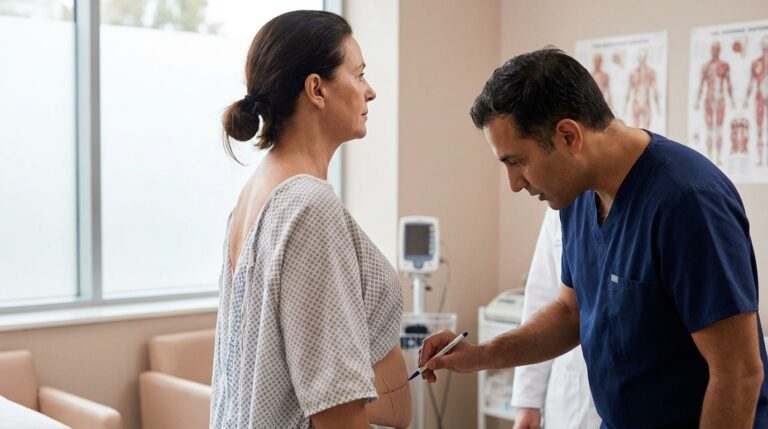
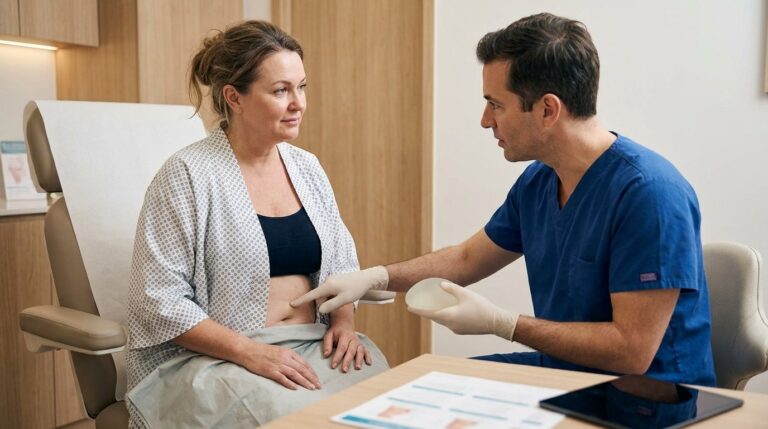
A proper decision about reconstruction should not be made from photos alone or from a brief cosmetic-style consultation. Breast reconstruction after mastectomy usually needs input from a multidisciplinary team, which may include a breast surgeon, plastic surgeon, oncologist, breast care nurse, and anaesthetist. That is especially important when cancer treatment is ongoing or radiotherapy is likely.
You will usually need a detailed medical history, an examination of the chest and any potential donor areas, and a review of cancer pathology and treatment plans. If flap surgery is being considered, some surgeons may request imaging to map blood vessels. Blood tests and fitness checks are also common before major reconstruction.
This review is where practical issues often become clear. For example, a person may be medically fit for surgery in general but still be a poor candidate for immediate implant reconstruction because the skin quality is poor, the blood supply is uncertain, or radiotherapy is planned. Another patient may look like a strong flap candidate until prior abdominal surgery changes that plan.
If you are travelling for treatment, send complete records before you travel. That includes operation notes if you have them, pathology reports, oncology letters, medication lists, and clear photos only if the surgical team asks for them. A remote enquiry can start the conversation, but it should not replace a careful in-person assessment. If you want to arrange that first step, a formal consultation request is more useful than relying on messaging alone.
⚠️ Do not treat online approval as a final decision A surgeon may say you appear suitable in principle, but final suitability can change after examination, review of cancer treatment, and anaesthetic assessment.
What is recovery really like, and how long do international patients usually need to stay?
Recovery varies a lot because breast reconstruction is not one operation with one timetable. An implant-based reconstruction often has a shorter early recovery than a flap, but there can still be drains, tightness, swelling, and activity limits for several weeks. A flap reconstruction usually means more discomfort at first and a slower return to normal because you are healing in two areas, not one.
In the first days, the team watches closely for bleeding, infection, fluid build-up, and blood-flow problems in flap tissue if a flap has been used. You may need help with daily tasks early on, especially if both breasts were operated on or if the donor site is the abdomen.
For international patients, the key question is not just “When can I leave the hospital?” but “When is it sensible to travel?” Longer flights, luggage handling, and the need for follow-up all matter. Most patients need to stay long enough for early checks, drain management where relevant, wound review, and a first assessment of healing. Flap patients usually need a longer stay than implant patients because early monitoring is more intensive.
You also need a plan for what happens after you go home. Ask who handles urgent concerns, whether dressings or drains need local care, when you can fly, and how complications would be managed from abroad. A safe reconstruction pathway for a travelling patient depends as much on aftercare planning as on the operation itself.
How should you think about cost, safety, and choosing a surgeon or clinic?
Cost should be discussed clearly, but it should not be reduced to a single headline figure. A personalised quote usually depends on the type of reconstruction, whether the surgery is immediate or delayed, hospital stay, implant choice if relevant, surgeon and anaesthetist fees, pre-operative tests, pathology or imaging needs, compression garments or bras, medications, and aftercare. Travel, accommodation, and the possibility of revision procedures are separate practical costs that patients sometimes overlook.
When you compare providers, look beyond marketing language. Breast reconstruction after mastectomy is not a standard cosmetic operation. It should be led by surgeons with relevant breast and reconstructive training, performed in an appropriately equipped hospital, and tied to a clear aftercare plan. BAAPS and EBOPRAS are useful reference points when you are checking training standards and specialist credentials.
Ask direct questions. Who will do each part of the surgery? Is the recommendation implant-based because it genuinely suits your case, or because other options are not available? How often does the team manage reconstructive patients who may need radiotherapy or revision? What happens if there is a complication after you return home?
A neutral way to assess safety is to look for evidence of process, not promises. You want detailed consent, realistic discussion of scars and asymmetry, clear explanation of risks, and honest advice if you are better off waiting. If a clinic avoids discussing delays, complications, nicotine cessation, or the impact of radiotherapy, that is a concern.
The team asks for oncology records, explains immediate versus delayed timing clearly, discusses radiotherapy honestly, and sets out a written follow-up plan.
You are promised a perfect result, pushed toward one method without explanation, or given very little detail on complication management after travel.
Frequently Asked Questions
References
- 📎NHS – Breast reconstruction
- 📎American Society of Plastic Surgeons – Cosmetic and reconstructive procedure information
- 📎BAAPS
- 📎EBOPRAS
Related Articles

You Might Also Like

Related articles
Our specialists
 Clineca SpecialistErkan PinegözPlastic & Reconstructive Surgery
 Clineca SpecialistHakan AktaşPlastic & Reconstructive Surgery
 Clineca SpecialistOrkun UzuneyüpoğluPlastic & Reconstructive Surgery
 Clineca SpecialistSalim İskenderPlastic & Reconstructive Surgery
 Clineca SpecialistEngin SelamioğluPlastic & Reconstructive Surgery
 Clineca SpecialistCem AydınPlastic & Reconstructive Surgery
 Clineca SpecialistAlperen ÖnalEar, Nose & Throat (ENT)